
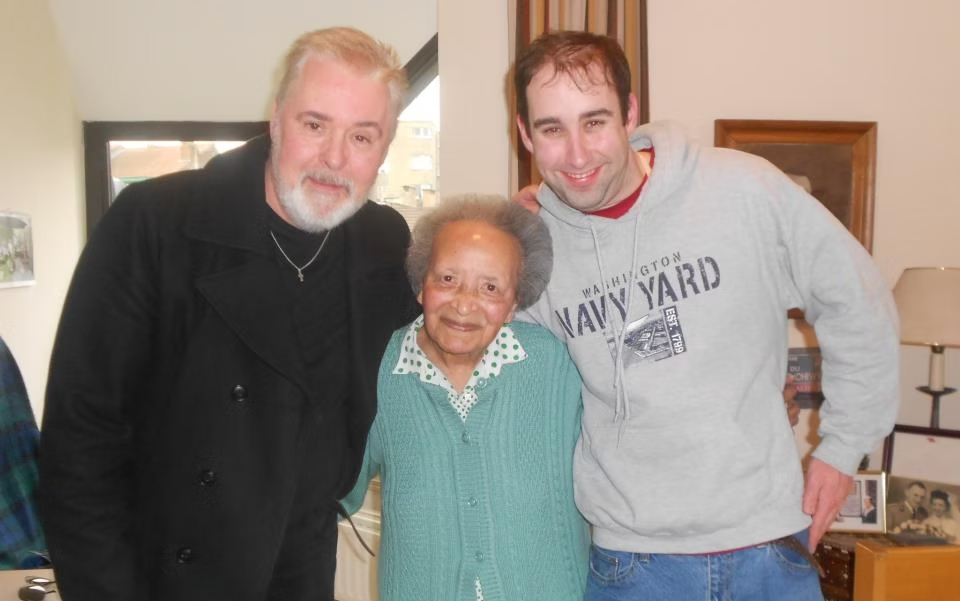
Born in the Congo
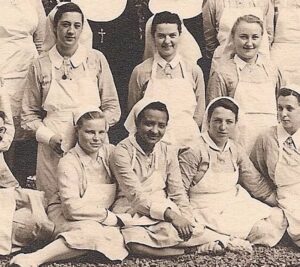
Augusta Chiwy was born in eastern Africa, the daughter of a Belgian veterinarian and a Congolese woman she never knew. She was one of thousands of biracial children fathered by Belgian men working in Africa during Belgium’s colonial era.
Journey to Bastogne
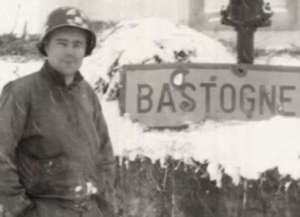
When she was nine years old, her father returned to his hometown of Bastogne, Belgium, and took Augusta with him. She was cared for by her father and his sister, whom Augusta called “mama Caroline.” She attended a Catholic boarding school where she was the only female black student.
Becoming a Nurse
Augusta dreamed of becoming a teacher, but Belgium’s racial prejudice prevented this path. On the advice of her father and uncle, she became a nurse instead. After qualifying, she began working at a large hospital north of Bastogne.
Christmas in Bastogne

Augusta accepted her father’s invitation to return home to celebrate Christmas. She arrived in Bastogne on the very day Hitler’s German army launched a surprise attack on the Allied front line. Within two days, Bastogne was surrounded and under constant bombardment.
The Aid Station
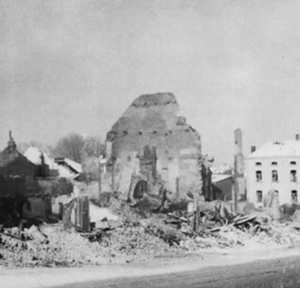
As hundreds of citizens took shelter in the cellar beneath a Catholic school, Augusta volunteered to help care for them. When U.S. Army doctor Captain Jack Prior desperately needed nursing assistance, he called on her. Augusta agreed to help, knowing that if the Germans captured Bastogne, she would likely be executed for aiding the Americans. For a month, she risked her life caring for U.S. soldiers under horrific conditions. With no surgical instruments, no anesthesia, and little medicine, she and Dr. Prior performed amputations with a large army knife and Cognac. They even went to battlefields to rescue wounded soldiers.
Heartbroken Farewell
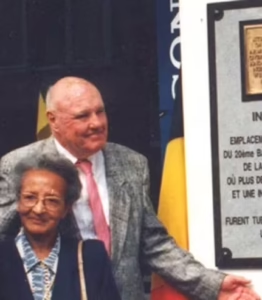
After General Patton’s Third Army routed the Germans and ended the siege, it was time for Dr. Prior and his battalion to move on. Augusta was heartbroken. The trauma of her experience would manifest as PTSD for decades to come. She and Jack exchanged addresses and would write letters for over 60 years.
Marriage and Family
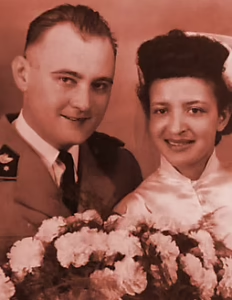
Twenty years after the war, Augusta resumed her nursing career. She married a Belgian soldier and the couple had two children. She lived quietly, working alongside people who had no idea what she had done or been through. She rarely spoke about the war, even to her own children.
A Knock at the Door
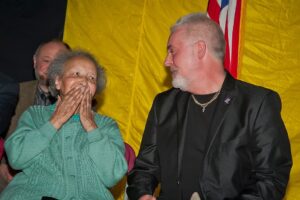
Military historian Martin King knocked on the door of Augusta’s room in a geriatric home in Brussels. After 18 months of searching, he had found her. Slowly, over months, Augusta shared her story with King, who worked tirelessly to ensure she received the recognition she deserved.
Recognition and Honor
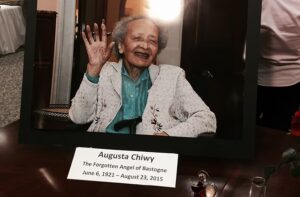
On June 24, 2011, Augusta was made a Knight of the Order of the Crown by King Albert II of Belgium. Six months later, she received the U.S. Army’s Civilian Award for Humanitarian Service. On March 21, 2014, she was recognized by Bastogne as a Citizen of Honor.
Peaceful Passing

At the age of 94, Augusta died peacefully in her sleep. Although forgotten by history for decades, she will always be remembered for her courage, compassion, and service to humanity. Her humble words remained: “I only did what I had to do.”